Solving the Most Common DMC Challenges with Integrated Travel Software

Destination Management Companies (DMCs) face a range of challenges that impact every aspect of their operations – from operational efficiency and financial management to the quality of client experience. Coordinating complex itineraries, managing multiple suppliers, and tracking finances often happens across disconnected systems, while last-minute changes and client requests add further complexity.
Whether handling small boutique events or large international trips, every DMC experiences common challenges: fragmented suppliers, manual processes, pricing and financial difficulties, technological gaps, and unexpected changes. These challenges are interconnected, creating cycles that consume time, increase costs, and compromise service quality.
Fragmented Suppliers and Communication Challenges
One of the most significant challenges DMCs face is supplier fragmentation. Hotels, transportation providers, and activity suppliers often operate in different systems and communication channels. This results in scattered information across emails, spreadsheets, messaging apps, and phone calls.
Such fragmentation leads to mistakes, double bookings, and miscommunications among team members. Managers spend hours verifying confirmations, updating lists, and ensuring that information is accurate before itineraries reach clients. This not only slows operations but also increases stress levels and the risk of errors.
The consequences of fragmented communication can be severe. Misaligned itineraries, mismanaged transfers, or unclear activity schedules negatively affect client satisfaction, and teams must dedicate extra resources to resolving conflicts that could have been prevented with a unified approach.
Manual Processes and Documentation
Creating itineraries, vouchers, manifests, and rooming lists manually is a time-consuming and error-prone process. Even minor mistakes (wrong room allocations, incorrect dates, or misplaced activity information) can cause major disruptions, additional costs, and client dissatisfaction.
Many DMCs rely on a mix of Word documents, Excel sheets, and repeated manual data entry. This reduces efficiency and forces staff to juggle administrative tasks alongside strategic planning and client communication.
Manual processes also increase operational risk. Teams may duplicate work, miss updates, or overlook critical details. The result is inefficient workflows that prevent employees from focusing on higher-value tasks like creating unique experiences for clients or building stronger relationships with suppliers.
Inefficient Quoting and Pricing
Pricing and quoting are critical but often inefficient processes for DMCs. Manual calculations and constant document updates create version control challenges, and mistakes in pricing can directly impact profit margins.
Travel costs fluctuate constantly due to currency shifts, seasonal rates, and supplier changes. Without a centralized system, staff spend hours recalculating costs and updating quotes, delaying client approvals and potentially causing lost business opportunities.
Inefficient quoting not only affects profitability but also undermines client trust. When updates are slow or inconsistent, clients may perceive the DMC as disorganized, which can harm long-term business relationships.
Payment and Financial Management Challenges
International payments, currency exchange, and tracking true profit margins are ongoing struggles for DMCs. Many companies only discover actual project profitability after a trip is completed, making forward planning difficult.
Complex payment flows include deposits, commissions, refunds, and supplier invoices across multiple currencies. Delays or errors in tracking these transactions can create financial strain, while staff spend excessive time manually reconciling accounts.
Integrated travel management software provides real-time visibility into costs and margins, enabling better decision-making and financial control.
Technology Gaps and Lack of Integration
Many DMCs rely on outdated or disconnected tools. This leads to limited visibility over clients, suppliers, and bookings. Communication is fragmented, and real-time tracking becomes almost impossible.
Modern travelers expect quick responses, transparent communication, and personalized experiences. Without integrated digital tools, DMCs risk falling behind competitors who leverage technology to streamline operations and improve client satisfaction.
Technology gaps hinder scalability as well. Teams may struggle to handle larger groups or more complex itineraries because manual processes become unsustainable at scale.
Managing Last-Minute Changes and Contingencies
Unexpected changes (delayed flights, canceled tours, or urgent client requests) require flexibility and fast response.
Without a centralized system, staff must manually coordinate changes across multiple documents and communication channels. This increases the risk of errors, delays, and miscommunication, affecting client experience and increasing stress for the team.
How Integrated Travel Software Solves DMC Challenges
Centralized Inventory and Supplier Management
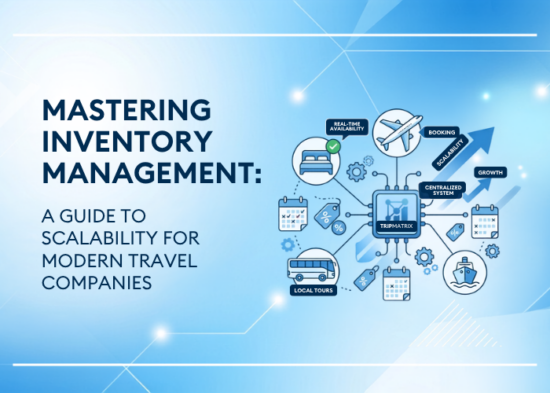
TripMatrix’s Inventory enables DMCs to manage all travel products, including accommodations, experiences and transfers within a single platform. Suppliers can be linked directly to each product, ensuring structured data management, improved coordination and consistent product information across teams.

Automated Itineraries and Documentation
TripMatrix’s Trip Templates enable fast creation of itineraries by allowing DMCs to reuse and adapt pre-built trip structures. This reduces manual setup, streamlines offer creation and ensures consistent documentation across all trips, helping teams save time and focus on tailoring experiences to client needs.

Accurate Quoting and Pricing
The Trip Planner enables precise and efficient creation of quotes, automatically calculating costs, margins, and currency conversions. Real-time updates ensure that pricing changes, additions, or adjustments are reflected across the system, reducing errors and improving client confidence.
Payments and Financial Management
TripMatrix’s Payments module centralizes financial tracking for deposits, invoices, and transactions, giving DMCs a clear overview of payment flows and financial status across bookings.

Integrated CRM and Client Portals
TripMatrix integrates a Contacts module and Traveler Portal to manage client relationships and gives a 360-degree view of client details. Teams can track client preferences, maintain records of previous trips, and share updates seamlessly, enhancing client experience and loyalty.

Quick Response to Last-Minute Changes
Real-time updates to itineraries, quotes, and documents allow teams to adapt quickly to unexpected events or urgent client requests. This ensures minimal disruption to operations while maintaining high service standards.
Benefits of Using Travel Management Software for DMCs
Using integrated travel software offers DMCs multiple advantages:
- Centralized management of all suppliers and inventory
- Simple creation and updating of itineraries and vouchers
- Accurate, real-time tracking of pricing, margins, and currencies
- Streamlined communication across teams and with clients
- Integrated CRM and Traveler Portal for enhanced client experience
- Flexibility to handle last-minute changes efficiently
By centralizing and automating key operations, TripMatrix reduces operational stress, improves efficiency, and supports profitability. DMC teams can focus on creative, strategic work, delivering higher-value experiences to clients while managing complex itineraries with confidence.
Take Control of Your DMC Operations Today
Managing a Destination Management Company comes with complex challenges, from fragmented supplier networks to last-minute itinerary changes. Integrated travel software like TripMatrix allows you to streamline operations, automate workflows, and improve profitability.
Discover how TripMatrix can simplify your DMC workflows and help you focus on what truly matters: delivering exceptional travel experiences.
Interested to see how
TripMatrix can supercharge your
travel business?
Request a Demo
Published on: April 13, 2026