How to Digitally Transform Your Travel Agency: A Step-by-Step Guide
Travel companies can no longer rely solely on traditional ways of doing business, because travelers expect speed, convenience and personalized experiences across every touchpoint. Digital transformation is no longer a competitive advantage. It has become a necessity for survival and sustainable growth in a highly competitive and constantly evolving travel industry.
If you own or manage a travel business and are wondering how to digitally transform your travel agency, this step-by-step guide will help you understand where to start, what to prioritize, and how to successfully navigate your digital transformation journey.
Assess the Current State of Your Travel Agency
Every successful transformation starts with a clear understanding of your current situation. Before investing in new tools or platforms, take time to evaluate how your agency operates today.
Key areas to review include:
- Existing processes: Which tasks are still handled manually? How much time does your team spend on bookings, invoicing, confirmations, and customer communication?
- Current technology stack: What systems are you using – CRM tools, booking engines, spreadsheets, email platforms? Are they connected or completely separate?
- Operational bottlenecks: Where do delays occur? Which processes are error-prone or difficult to scale?
This assessment helps you identify gaps, set priorities, and avoid implementing technology that does not solve real business problems.
Define Clear Digital Transformation Goals
Digital transformation can mean many things, from automating operations to improving customer experience or increasing online sales. That’s why it’s essential to define clear and measurable goals.
Examples of common objectives include:
- Increasing online bookings
- Reducing manual administrative work
- Improving response times and customer satisfaction
- Centralizing customer and trip data
- Enabling business scalability
Your goals should be specific, measurable, achievable, relevant, and time-bound (SMART).
Strengthen Your Digital Presence: Website and Mobile Experience
Your website is often the first interaction potential clients have with your agency. If it is slow, outdated, or difficult to use, travelers may move on to competitors within seconds.
Focus on:
- Mobile responsiveness: Most travelers browse and research trips on mobile devices.
- Clear navigation and structure: Users should easily find destinations, packages, and contact options.
- Booking-ready experience: Even if final bookings happen offline, your website should support inquiries, quotes, and trip previews.
- Performance tracking: Use analytics to understand visitor behavior and improve conversion paths.
A strong digital presence builds trust and sets the foundation for all other digital initiatives.
Automate Booking and Administrative Processes
One of the biggest benefits of digital transformation is automation. Manual processes slow teams down, increase the risk of errors, and significantly limit scalability.
Automation can include:
- Booking workflows that reduce repetitive data entry
- Centralized customer records instead of scattered emails and documents
- Automated confirmations and documentation
- Integrated payment handling to track transaction status easily
By reducing manual work, your team can focus on higher-value activities such as customer consultation, trip customization, and relationship building.
Improve Customer Experience Across the Entire Journey
Digital transformation is about creating a better experience for travelers at every stage.
Ways to improve customer experience include:
- Personalized trip offers based on traveler preferences and history
- Clear, consistent communication before, during, and after the trip
- Easy access to itineraries and travel details
- Transparent pricing and documentation
A seamless experience increases trust, encourages repeat bookings, and turns customers into long-term advocates for your agency.
Introduce Personalized Travel Packages and Offers
Today’s travelers want experiences that reflect their interests, lifestyle, and budget. Digital tools make it possible to move away from generic packages and offer customized solutions at scale.
You can achieve this by:
- Segmenting customers based on travel behavior and preferences
- Creating flexible packages that combine multiple services
- Reusing and adapting successful itineraries for similar traveler profiles
- Building loyalty through tailored offers and repeat-customer incentives
Personalization not only improves conversion rates but also differentiates your agency in a crowded market.
Automate Communication and Customer Support
Speed and consistency in communication are critical in the travel industry. When done right, digital transformation allows agencies to maintain high responsiveness without overwhelming their teams.
Key improvements include:
- Automated responses to common inquiries
- Structured communication workflows for bookings and updates
- Centralized visibility of all customer interactions
- Consistent messaging across email and other communication channels
Automation ensures that no inquiry is missed and that customers receive timely, relevant information throughout their journey.
Choose the Right Technology Partners
Rather than using multiple disconnected tools, many agencies benefit from working with a single platform that supports core travel operations.
When evaluating technology partners, look for solutions that:
- Centralize customer, trip, and service management
- Support customized itineraries and offers
- Simplify payment and operational workflows
- Scale with your business as it grows
The right partner reduces complexity and allows your agency to focus on delivering value instead of managing software.
How TripMatrix Helps Digitally Transform Your Agency
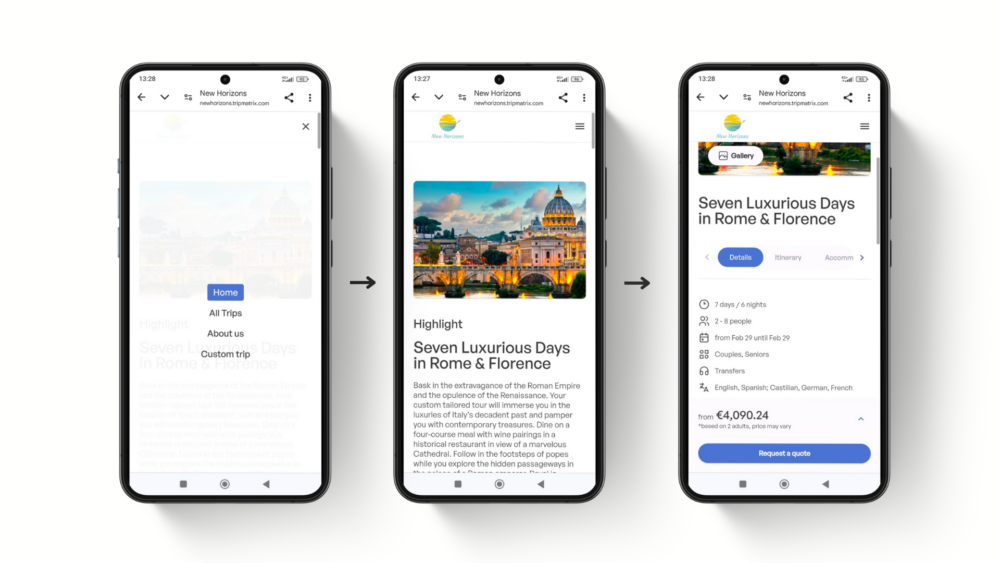
Implementing a full digital transformation can be challenging without the right tools, especially when travel agencies rely on multiple disconnected systems to manage clients, trips, offers, and payments. TripMatrix is an all-in-one platform designed specifically for travel businesses, enabling them to centralize their entire operation within a single, intuitive system.
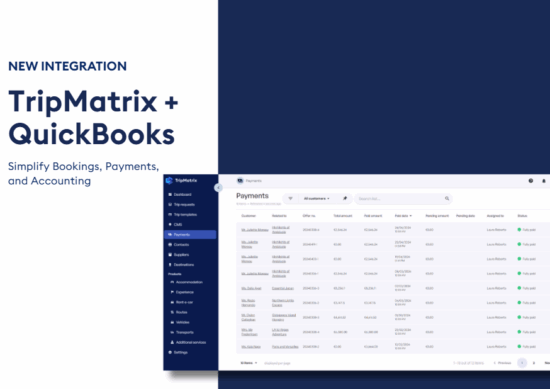
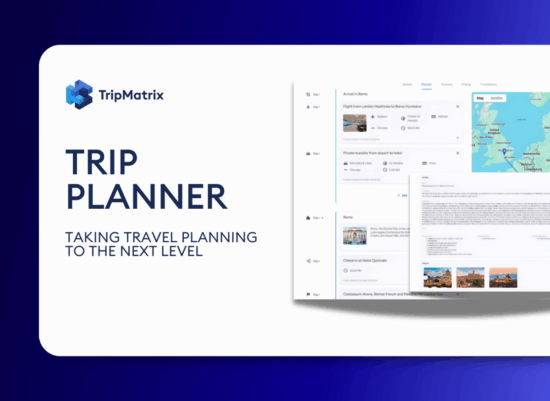
TripMatrix provides an integrated CRM that allows agencies to manage contacts, store traveler data, and track booking history and interactions in one place. The platform also supports product and inventory management, helping agencies organize accommodations, transportation, and travel services efficiently. With its Trip Planner, agencies can create customized itineraries and travel offers while maintaining full control over pricing and trip structure. In addition, built-in payments allow agencies to manage transactions directly within the platform without relying on external tools.
By consolidating these essential functions into one system, TripMatrix reduces operational complexity, saves time, and helps travel agencies operate more efficiently while delivering better customer experiences.
To give a clearer picture of how this works in practice, a short TripMatrix walkthrough video below demonstrates the platform’s core functionalities, from managing clients and trips to creating itineraries and handling payments, all within a single, intuitive interface.
Conclusion
Digital transformation is not a one-time project but a continuous journey toward greater efficiency, flexibility, and customer focus. By modernizing processes, automating operations, and adopting integrated digital platforms, travel agencies can respond faster to market changes and traveler expectations. With the right strategy and tools in place, digital transformation becomes a powerful driver of growth, enabling agencies to scale their business, strengthen customer relationships, and remain competitive in an increasingly digital travel landscape.
Ready to see how digital transformation can work in practice?
Request a TripMatrix demo and discover how a single, integrated platform can simplify your operations, improve efficiency, and elevate your travel agency’s customer experience.
Interested to see how
TripMatrix can supercharge your
travel business?
Request a Demo
Published on: January 27, 2026